Why 73% of Local Business Websites Fail on Mobile (And How to Fix It in 2026)
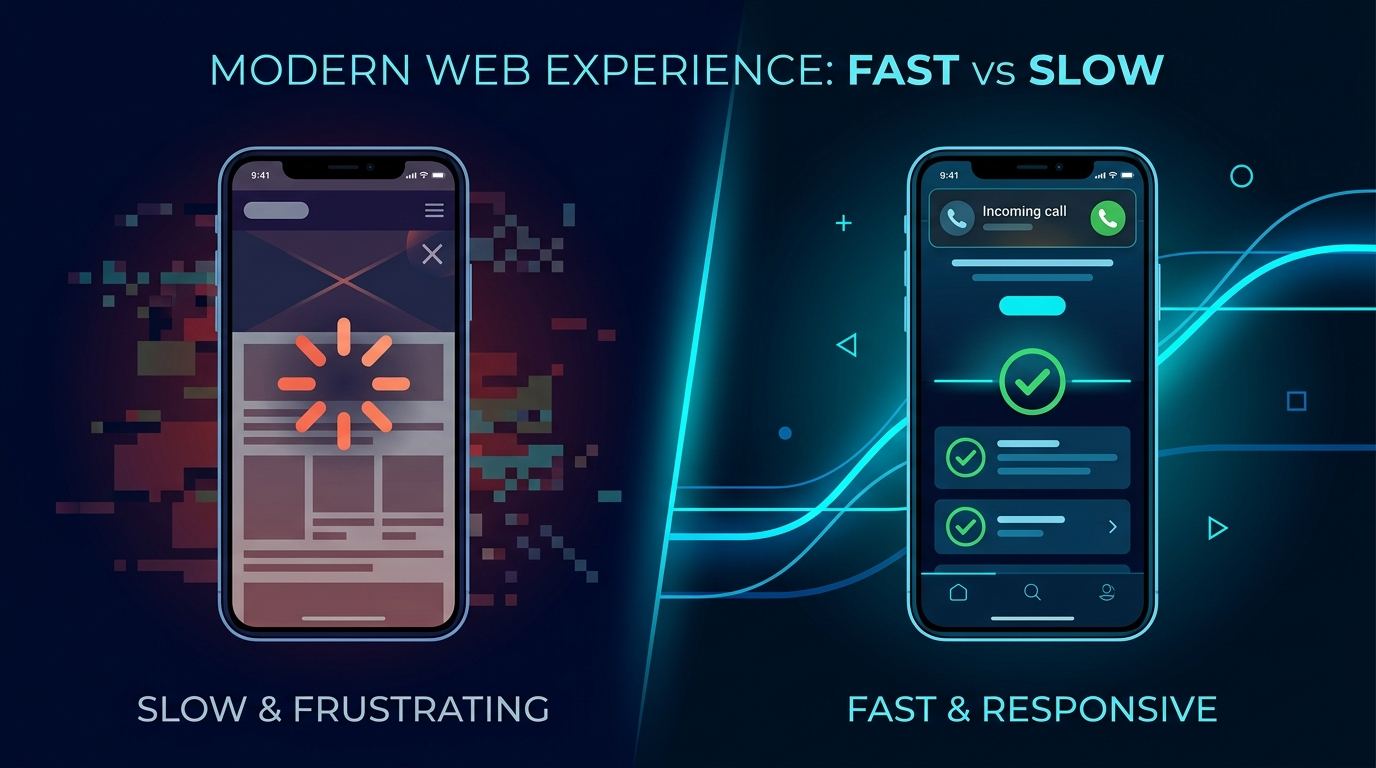
Every single day, thousands of local consumers across your service area pull out their smartphones to find an emergency plumber, an electrician, a contractor, a lawyer, or a local service company. In 2026, over 76% of all local business search intent originates on handheld smartphones.
Quick answer
- Speed: most sites launch in days, not months
- Anywhere: we work with businesses worldwide
- Not sure yet? Get a free audit of your current site.
Live sites we build and run: HowJamaica, Jamaica Online Shop, Knightly Report, IAmSurveyors. You own your domain, content and files.
Yet, when prospective buyers tap on local business search listings, almost three out of four websites fail dramatically on mobile. They take 6 to 9 seconds to load, hide phone numbers behind complex menus, force users to pinch-and-zoom to read service details, or freeze up when loading bloated desktop animations.
The result? The prospective customer taps the back button within 4 seconds and calls your closest local competitor. Below is an exhaustive forensic breakdown of why mobile websites fail local service companies and the exact architectural fixes required to convert mobile visitors into scheduled paying jobs.
The 5 Fatal Mobile Flaws That Drain Local Revenue
1. Severe Load Latency (The 3-Second Bounce Cliff)
According to official Google Web Vitals research, if a mobile web page takes longer than 3 seconds to load on a 4G/5G mobile connection, over 53% of visits are abandoned instantly. Mobile users are in transit, on job sites, or managing busy schedules—they do not wait for sluggish servers.
Most local websites fail because they are built on heavy, unoptimized platforms (like WordPress with 35 active plugins or visual page builders) that force cellular connections to download 8MB to 15MB of uncompressed assets, scripts, and trackers. As detailed in our breakdown on how slow websites waste Google Ads budgets, latency destroys conversion rates before the customer ever sees your headline.
2. Absent or Buried "Tap-to-Call" Action Triggers
Desktop users might browse websites with multiple open tabs and fill out 10-field contact forms. Mobile users behave completely differently: they want immediate phone contact. If a potential client has a leaking pipe, a broken air conditioning unit, or an urgent roofing repair, they will not manually copy a 10-digit number from an obscure footer.
High-converting mobile websites implement a sticky bottom or header action bar featuring prominent "Call Now" and "WhatsApp Us" buttons that remain within immediate thumb reach at every stage of the scroll.
3. The Desktop-First Pinch-and-Zoom Nightmare
Many legacy web designers design exclusively on 27-inch desktop monitors, then apply superficial "responsive" scaling as an afterthought. When viewed on a 6-inch phone screen:
- Body copy shrinks to unreadable 10px text that requires horizontal scrolling and manual zooming.
- Navigation menus expand into massive full-screen overlays that block content and cannot be closed easily.
- Clickable buttons and phone links are spaced too closely together, causing accidental mis-clicks.
4. Desktop-Sized Images Crushing Mobile Data Limits
Uploading raw 4000x3000px camera photos directly into website galleries without modern WebP/AVIF compression or responsive <picture> source-sets is fatal. A mobile browser only needs an 800px image, but is forced to download a 5MB JPEG file over mobile cellular data. This tanks your Google PageSpeed score and triggers Google's mobile indexing penalties.
5. Complex Multi-Field Forms vs. Frictionless Lead Capture
Filling out extensive text fields on a virtual smartphone keyboard is notoriously frustrating. If your contact form asks for First Name, Last Name, Physical Address, Service Type, How You Heard About Us, and a 200-word Project Description, over 80% of mobile users will abandon the form mid-way. Mobile lead capture requires a maximum of 3 fields: Name, Phone/WhatsApp, and Service Needed.
Turn Mobile Visitors into Paying Calls in 48 Hours
MarketStreet builds lightweight, mobile-first websites that load in under 1.2 seconds, feature 1-tap call buttons, and include full local Google setup. Custom quoted, zero monthly hosting locks.
The 7-Point Mobile Audit for Local Service Companies
Run your current website through this practical 60-second test on your own smartphone:
✓ 1. Speed Test on Cellular Data
Disconnect from office Wi-Fi and load your homepage over standard 4G cellular data. If the primary headline and phone button are not visible within 2 seconds, you are losing more than half your paid and organic clicks.
✓ 2. Thumb-Zone Action Buttons
Can a user trigger a phone call or WhatsApp message with their right or left thumb without shifting their hand grip? High-converting mobile layouts prioritize the natural mobile thumb zone.
✓ 3. Tap Target Sizing (48px Rule)
Ensure all interactive elements, navigation links, and form fields have a minimum touch target size of 48x48 pixels with at least 8px of padding between adjacent buttons.
✓ 4. Google Maps & Navigation Integration
Does your address open directly in Google Maps or Apple Maps with turn-by-turn driving directions in 1 click? Local clients need instant physical verification.
✓ 5. Zero Horizontal Scroll
Verify that tables, pricing cards, and wide gallery images do not overflow horizontally, creating annoying side-to-side wobble.
✓ 6. Security & Clean Code Architecture
Avoid outdated CMS platforms riddled with abandoned plugins. Review our guide on why WordPress websites get hacked to see how clean HTML/PHP architecture eliminates vulnerabilities.
✓ 7. Transparent Local Pricing & Guarantees
Mobile shoppers want quick clarity on price ranges and turnaround times. Read our comprehensive contractor website cost breakdown to see standard commercial pricing models.
Frequently Asked Questions (FAQ)
Related Local Business Growth Guides:
- Contractor Website Cost Breakdown in 2026: Real Agency Rates vs Fast Custom Builds
- How Contractors Rank in Google Maps Local 3-Pack in 30 Days
- Is Your Slow Website Wasting Your Google Ads Budget? Speed vs ROI
- Turnkey Website Design for Contractors & Trade Businesses
- Case Study: Scaling HowJamaica News & E-Commerce Web Portal
Get a free audit of your website
Built fast, anywhere in the world. No sales call — we send a short plain-English report with your top 3 fixes.
Live sites we build and run: HowJamaica, Jamaica Online Shop, Knightly Report, IAmSurveyors. You own your domain, content and files.